Gas Safety Legislation
Understand your legal obligations under UK gas safety law. Key regulations, compliance requirements, and what they mean for your business.
 Officially Registered
Landlord Obligations
If you let a property that contains gas appliances — boilers, water heaters, cookers, hobs, or fires — the law requires you to arrange an annual safety inspection carried out by a Gas Safe registered engineer. The resulting gas safety record must be provided to your tenant within 28 days of the check and retained for a minimum of two years.
Commercial Landlords & Letting Agents
Properties let for commercial use must hold a valid gas safety certificate before tenants take occupation. The certificate must be renewed every twelve months without exception, and a copy made available to the tenant on request.
Hospitality & Food Service Businesses
Environmental Health Officers routinely request sight of a current gas safety certificate when inspecting restaurants, hotels, pubs, clubs, and takeaways. Failure to produce one can result in an improvement notice or, in serious cases, immediate closure of the premises.
Our engineers are available throughout the day, evening, and weekends to carry out inspections at a time that minimises disruption to your business, your staff, and your customers.
Key Legislation at a Glance
Gas Safety (Installation and Use) Regulations 1998
Mandates annual gas safety checks on all appliances in rented and commercial properties. Safety records must be kept for at least two years.
Health and Safety at Work etc. Act 1974
Places a duty on employers to protect the health and safety of employees and any person affected by their business operations, including the maintenance of gas equipment.
Building Regulations — Approved Document J
Governs the installation of combustion appliances and fuel storage systems. All new gas installations must comply, and the appropriate certification must be issued.
Regulations, Standards & Approved Codes of Practice
The following official resources provide detailed information on gas safety legislation, approved codes of practice, and industry standards that govern commercial gas safety inspections in the UK.
Gas Safe Register ↗
The official registration body for gas engineers in the UK. Verify your engineer's credentials and find registered businesses.
HSE — Gas Safety (Installation and Use) Regulations 1998 ↗
Health and Safety Executive guidance on landlord gas safety duties under GSIUR 1998.
IGEM — Institution of Gas Engineers and Managers ↗
Professional body publishing standards and codes of practice for the gas industry including IGE/UP and IGEM/UP series.
BSI — British Standards Institution ↗
Publisher of BS 6891 (gas installations) and other British Standards relevant to gas safety work.
Approved Code of Practice (ACoP) L56 ↗
HSE Approved Code of Practice and guidance for the Gas Safety (Installation and Use) Regulations 1998.
Health and Safety at Work etc. Act 1974 ↗
Full text of the Act placing duties on employers to ensure the health and safety of employees and the public.
Building Regulations Approved Document J ↗
Government guidance on combustion appliances, flue systems, and fuel storage requirements.
National Gas Emergency Service ↗
If you smell gas or suspect a gas leak, call 0800 111 999 immediately. Available 24/7.
Scope of the Inspection — From the Meter Onwards
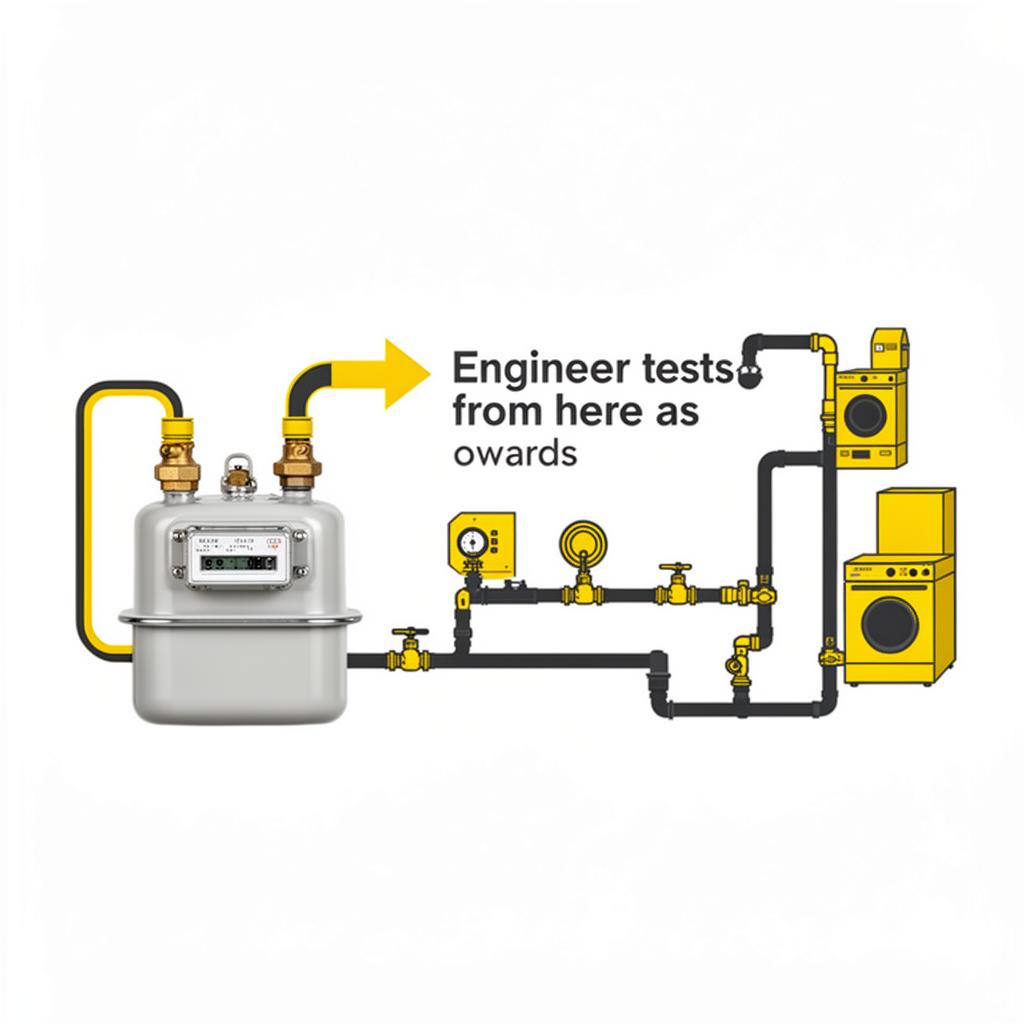
Downstream of the Gas Meter Only
By regulation, our engineers inspect and test the gas installation from the outlet of the gas meter onwards. Everything upstream — the service pipe and the meter itself — falls under the gas transporter's responsibility.
Included in the inspection:
- ✓ All internal gas pipework from the meter to each appliance
- ✓ Every connected gas appliance (boilers, cookers, heaters, etc.)
- ✓ Isolation valves and emergency controls
- ✓ Flue systems, ventilation openings, and extraction
- ✓ Operating pressure at each appliance
Not included:
- ✗ The incoming supply pipe before the meter (gas transporter's asset)
- ✗ The gas meter itself (owned by your gas supplier)
- ✗ Any leak or fault on the supply side of the meter
Suspect a gas leak before the meter? Call the National Gas Emergency Service on 0800 111 999 immediately — it is free and available 24/7.
Understanding Inspection Outcomes
Every appliance inspected receives one of three classifications. Knowing what each means helps you respond quickly and keep your business running safely.
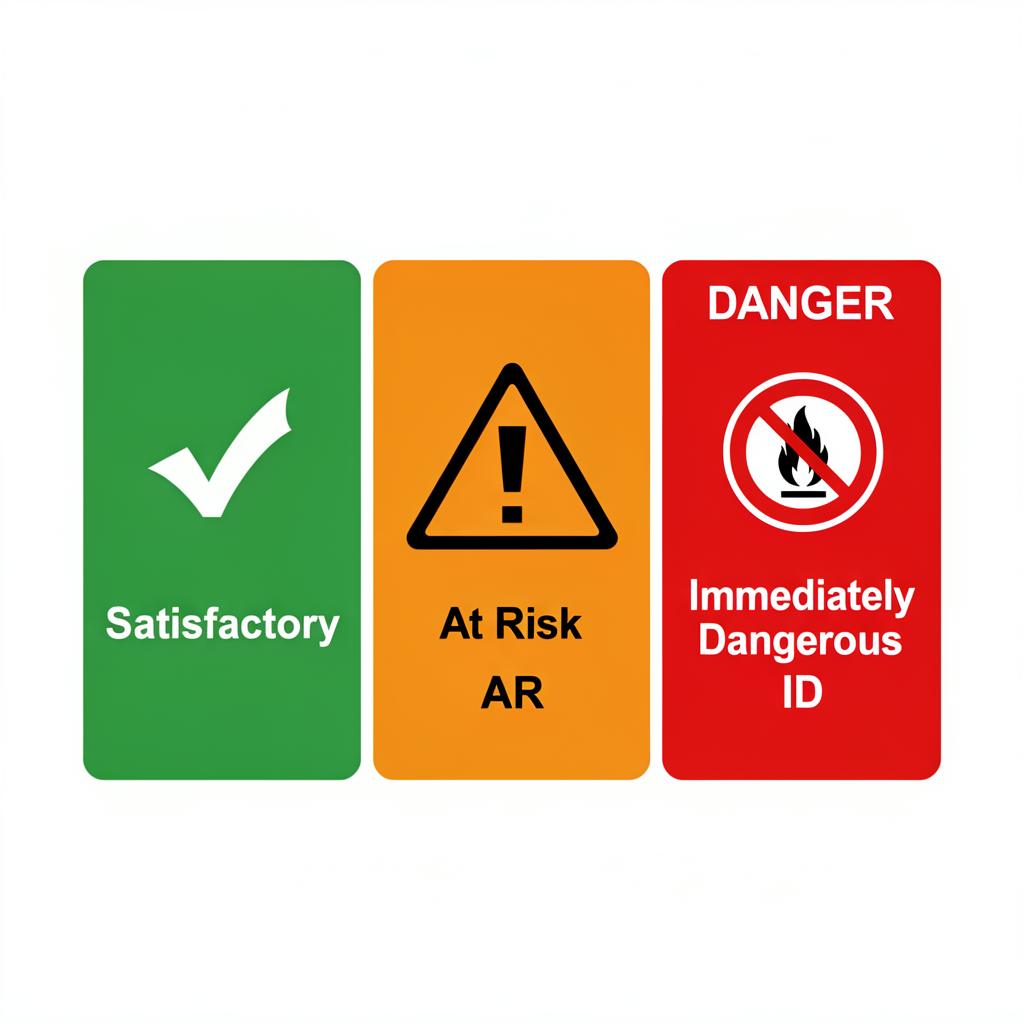
Satisfactory
The appliance meets all current standards and is safe to operate. Simply schedule your next annual check and continue trading with confidence.
At Risk (AR)
The appliance falls short of current standards but poses no immediate threat to life. Continued use is at the responsible person's discretion while remedial work is arranged promptly.
- • Ventilation below recommended levels
- • Minor flue joint deterioration
- • Overdue servicing or worn seals
- • Damaged flame supervision device
Immediately Dangerous (ID)
The appliance poses an immediate risk to life. The engineer must disconnect and isolate it on the spot. Reconnection is only permitted after a qualified repair and a fresh safety inspection.
- • Active gas leak detected
- • Blocked or severed flue
- • Dangerously high CO readings
- • Flame failure device bypassed
- • Critical ventilation deficiency
We also service the equipment we can't certify — fridges, freezers and AC. One call, one engineer team.
Warning Notices Explained
When a fault is identified, the engineer records it formally. Here is what each notice type means for you and your premises:
At Risk Notice
Issued when an appliance does not fully conform to current standards yet is not life-threatening. The responsible person — landlord, manager, or business owner — is informed and should arrange repairs without delay.
Practical impact: The appliance may remain in use at your own risk while repairs are scheduled. However, if you decline to act, the engineer can escalate the classification to Immediately Dangerous.
Immediately Dangerous Notice
Issued when there is a direct and immediate risk to life. The engineer disconnects and caps the gas supply to the appliance without exception.
Practical impact: The appliance is labelled "DO NOT USE" and cannot be reconnected until a Gas Safe registered engineer completes repairs, confirms safe operation, and issues a new safety record.